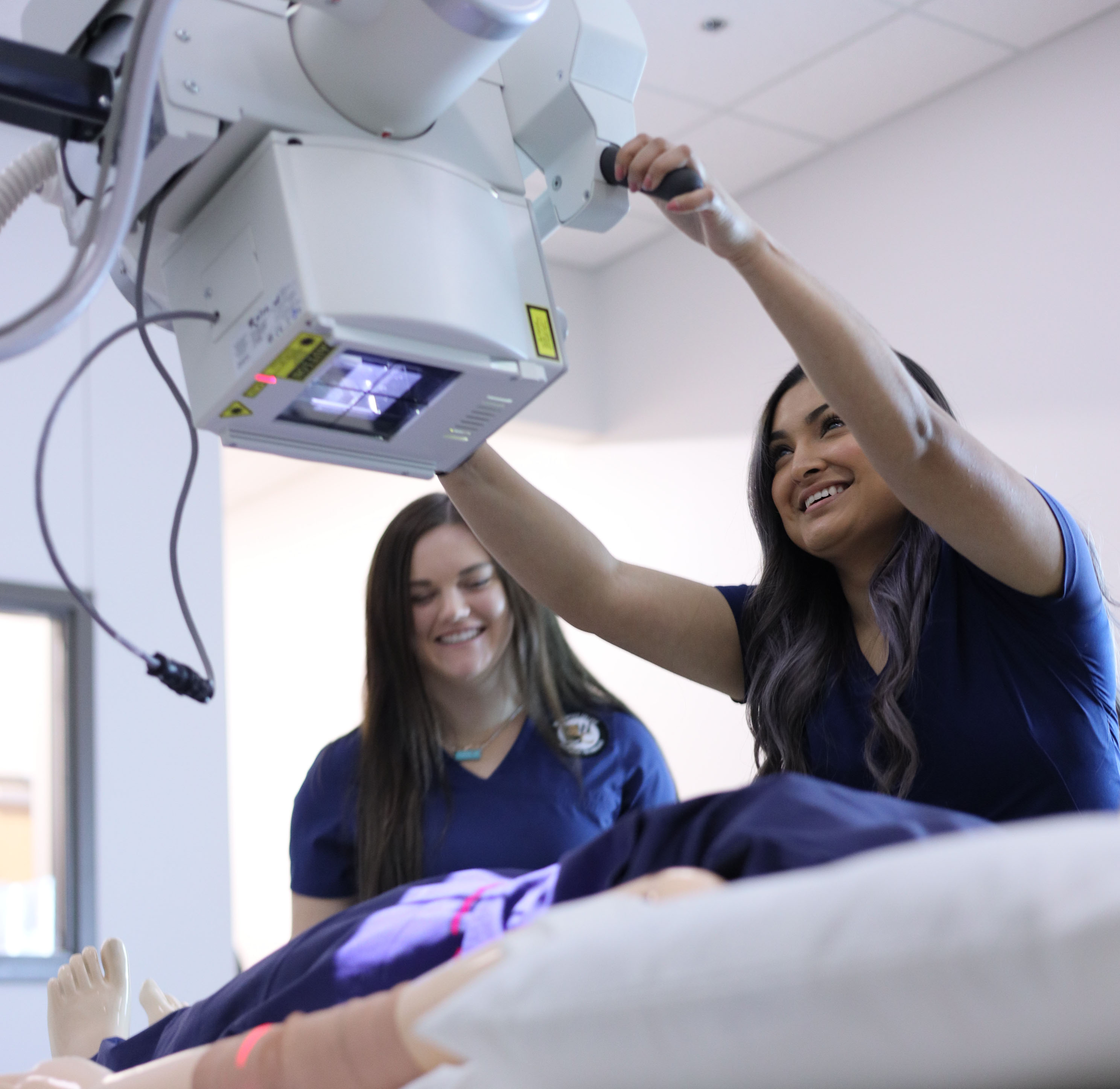
The Radiologic Technology Program is a full-time, two-year program leading to an Associate of Applied Science degree. Students participate in both classroom instruction and clinical education throughout the program.
No. This is an in-person program. Students attend didactic classes on campus and complete clinical rotations at affiliated healthcare facilities.
Many students continue to work while in the program; however, due to the demanding
schedule, this can be challenging.
Approximately 28-32 students are accepted into each cohort.
No. Students who are not selected must reapply during the next application cycle.
Applicants selected for further consideration will be invited to participate in a
panel interview as part of the admissions process.
No. The Radiologic Technology Program does not require the TEAS or HESI entrance examination.
Applicants must have a minimum cumulative college GPA of 2.5 to be eligible to apply.
Admission to the Radiologic Technology Program is highly competitive and varies each
year based on the applicant pool. Applicants are encouraged to earn the highest grades
possible in their prerequisite courses and complete Anatomy & Physiology II before
applying to maximize their admission points. Additionally, applicants who have earned
or are close to completing an associate or bachelor's degree should consider waiting
until the degree is officially awarded, as previous college degrees earn bonus admission
points.
Students rotate through a variety of affiliated hospitals, outpatient imaging centers,
surgery centers, and specialty clinics throughout the DFW region.
Clinical assignments are determined by the program based on educational needs and
clinical availability.
Yes. Students are responsible for transportation to all assigned clinical sites.
No. The Radiologic Technology Program does not coordinate observation or shadowing
experiences. Prospective students should contact local healthcare facilities directly
regarding observation opportunities.
Graduates who successfully complete all program requirements and meet ARRT eligibility
requirements are eligible to apply for the ARRT national certification examination.
Yes. Many graduates continue into advanced imaging modalities such as:
- CT
- MRI
- Mammography
- Interventional Radiology
- Cardiovascular Interventional Technology
- Bone Densitometry
- Education
- Administration
Radiologic Technology
Number of Credits
64