Cip Code: 51.1801
Pending The Commission on Opticianry Accreditation (COA) approval.
Overview
The outlook for ophthalmic assistant roles is positive. As a newer field, it is gaining in popularity as the demand for healthcare services also grows with technological advancements and an aging population.
Key Responsibilities
Patient Work-ups: Taking detailed medical histories and assessing vision.
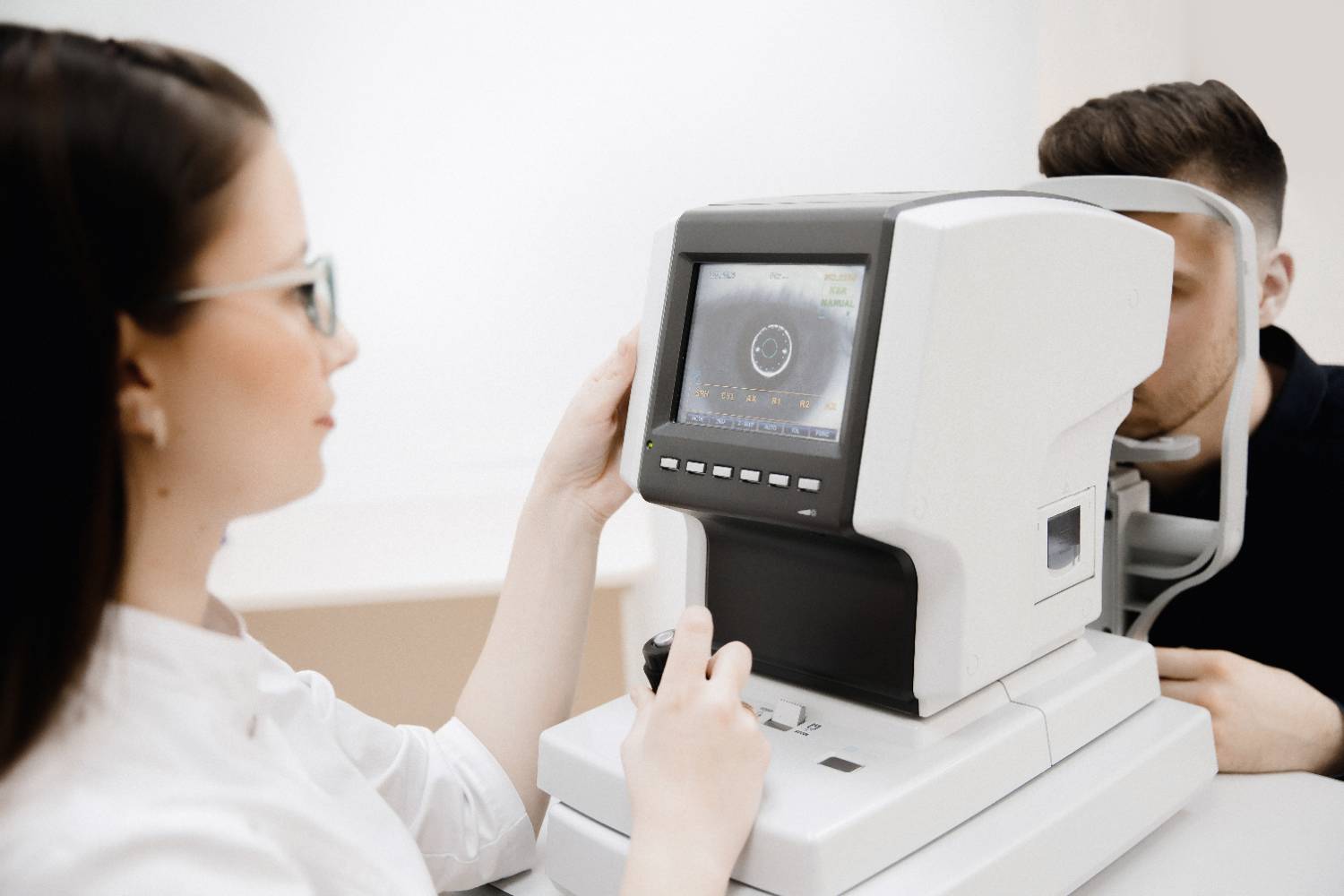
Diagnostic Testing: Performing tonometry (eye pressure), visual field testing, keratometry,
and imaging of the eye.
Refractometry: Measuring for glasses prescriptions and fitting contact lenses.
Surgical Assistance: Assisting with minor office procedures and eye surgeries.
Equipment Maintenance: Cleaning, sterilizing, and maintaining specialized ophthalmic
equipment.
Training and Certification
Education: Programs typically range from 12 months to a 2-year Associate Degree, covering
ocular anatomy, optics, and disease.
Certification: The International Joint Commission on Allied Health Personnel in Ophthalmology
(IJCAHPO) offers the Certified Ophthalmic Technician (COT) designation, which involves
a multiple-choice exam and a skill evaluation.
Experience Route: Alternatively, individuals can become certified after 1 year of
on-the-job experience and required training hours.
Career Outlook and Requirements
Demand: Excellent, with high demand for technicians due to an aging population.
Work Environment: Primarily clinics and hospitals, offering 35-40 hour work weeks
with limited weekends or evenings.
Skills: Requires manual dexterity, interpersonal skills, and an interest in science.
Common Skills Developed
Ocular Motility: Testing eye movement.
Tonometry: Glaucoma detection.
Visual Field Evaluation: Measuring peripheral vision.
Computerized Imaging: Measuring retinal layers and cornea.
Career Options
Excellent, with high demand for technicians due to an aging population.
Related Programs